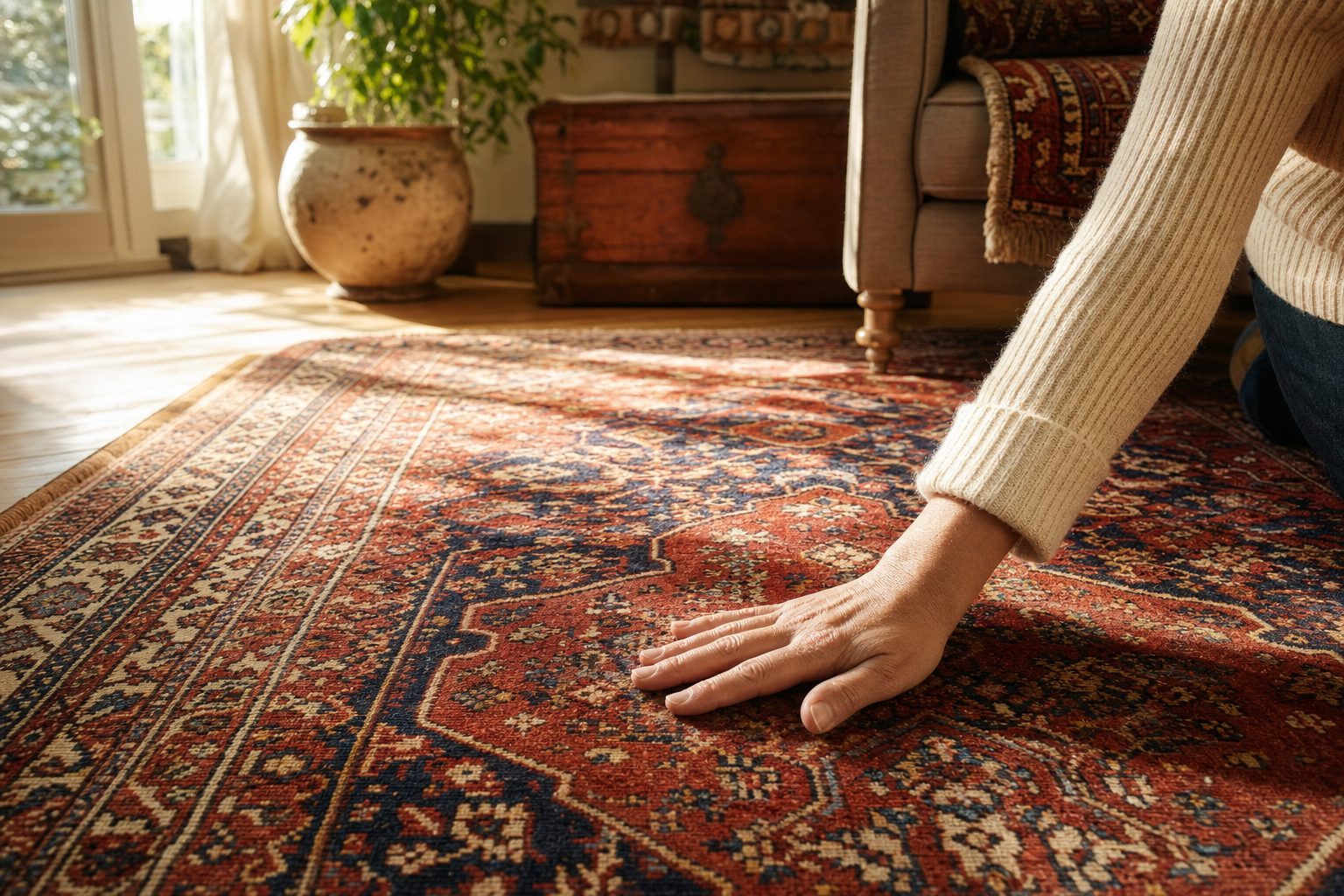
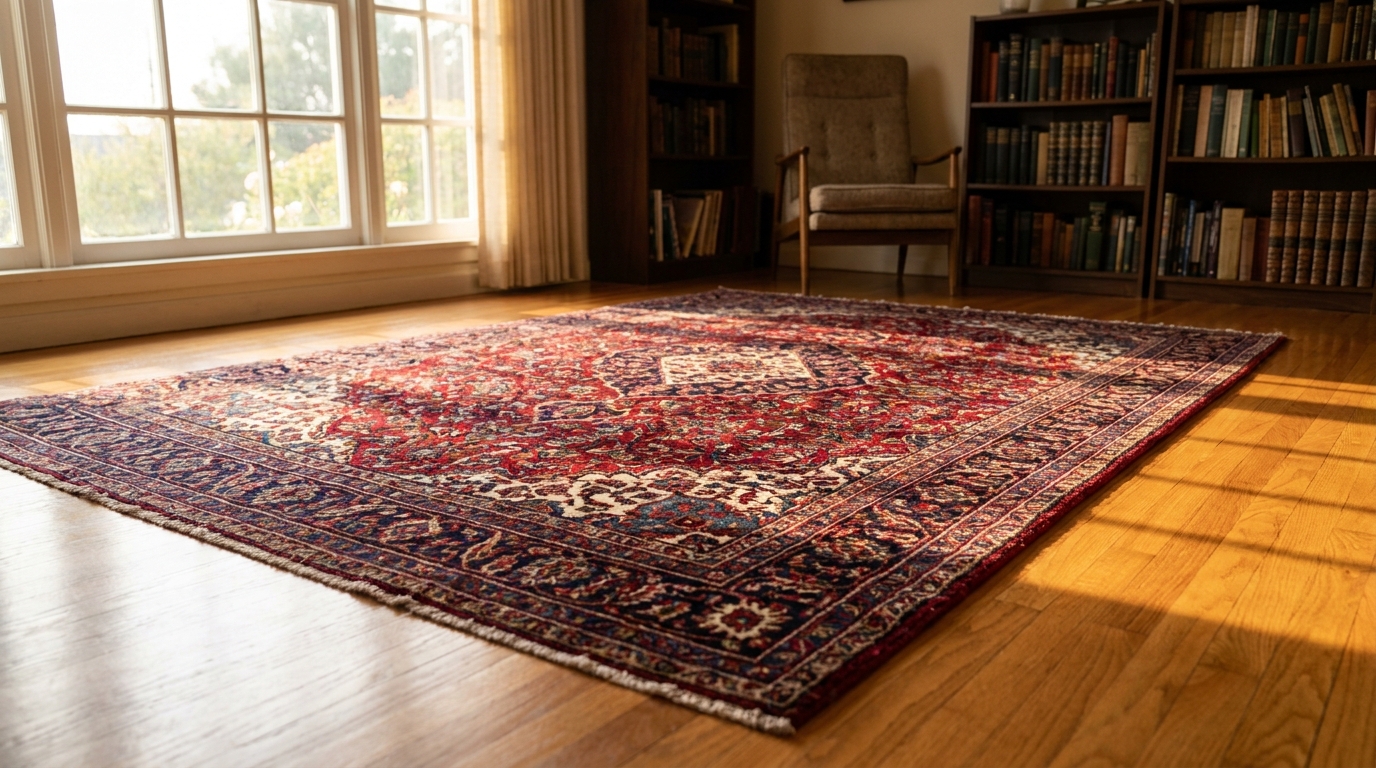
A Homeowner's Guide to Antique Oriental Rug Restoration
An antique oriental rug is rarely just a floor covering. It may be a century-old Persian design Tabriz passed down through three generations, a hand-knotted Caucasian Kazak discovered at an estate sale, or an Anatolian kilim that traveled across continents before finding a home in a Palo Alto living room. Whatever its origin, its value — monetary, cultural, and sentimental — is woven into every knot.
That value is also quietly vulnerable. Sunlight, foot traffic, improper cleaning, and the simple passage of time all take a toll on aged wool, Art Silk / Silk-Like Fiber, and natural dyes. Understanding what antique oriental rug restoration actually involves — and knowing when to act — is one of the most important things a careful owner can do.
Why Antique Rugs Require Specialist Care
The word "antique" carries a specific meaning in the rug world: generally, a rug that is 80 to 100 or more years old. At that age, the foundation fibers (typically cotton or wool warp and weft threads) have experienced decades of stress. Natural dyes — madder root, indigo, pomegranate rind — can be chemically sensitive in ways that modern synthetic dyes are not. Pile height may have worn unevenly. Fringe, which is an extension of the structural foundation rather than a decorative addition, may be fraying or missing entirely.
This is precisely why antique oriental rugs should not be treated the same way as wall-to-wall carpet. Steam cleaning and rotary scrubbing methods designed for synthetic broadloom can introduce excessive moisture into an aged foundation, cause dye migration in vegetable-dyed rugs, and apply mechanical force that accelerates fiber breakdown. The difference is not a matter of opinion — it is a matter of material science.
Specialist rug care, by contrast, begins with an assessment of the rug's construction, fiber content, dye stability, and existing damage before a single drop of water is introduced. You can read more about what that process looks like on our care and restoration page.
Common Forms of Damage in Antique Oriental Rugs
Knowing what to look for helps you catch problems early, when intervention is less costly and more effective.
Fringe Loss and Foundation Damage
Fringe is not decorative trim sewn onto the edge of a rug — it is the exposed end of the warp threads that form the rug's skeleton. When fringe breaks or disappears, the structural integrity of the rug itself is at risk. Left unaddressed, warp threads begin to unravel, and knots along the end border start to loosen and fall away. This is one of the most common — and most urgent — forms of damage to address.
Moth Damage
Wool is a natural protein fiber, and it is a preferred food source for moth larvae. Damage typically appears as thinned or bare patches, often in low-traffic areas where the rug sits undisturbed. In antique rugs, even moderate moth damage can create structural weakness that spreads if the rug continues to be walked upon.
Dry Rot
Dry rot occurs when a rug's cotton foundation is exposed to prolonged moisture — often from a leak, a humidifier, or a rug pad that traps condensation — and then dries without proper treatment. The cotton fibers become brittle and begin to disintegrate. A rug with dry rot may look fine from the surface but crumble when flexed. Early detection is critical.
Fading and Dye Bleeding
Natural dyes in antique rugs can fade with prolonged UV exposure, particularly in the bright, south-facing rooms common in Bay Area homes. Dye bleeding — where one color migrates into an adjacent area — is often caused by improper washing with water that is too hot or too alkaline. A specialist can assess dye stability before any cleaning begins.
Worn and Missing Pile
High-traffic areas — hallways, entryways, in front of sofas — naturally experience pile compression and loss over decades. In antique rugs, this wear can expose the foundation and, if left unaddressed, lead to structural damage. Skilled reweaving can restore pile height and pattern continuity in a way that is nearly invisible to the eye.
What Antique Oriental Rug Restoration Actually Involves
Restoration is not a single service — it is a sequence of carefully matched interventions, chosen based on the specific condition of the rug.
Assessment comes first. A knowledgeable specialist will examine the rug's weave structure (Turkish vs. Persian design knotting, for example), its fiber content, dye behavior, and the nature and extent of any damage. This step determines everything that follows.
Hand-washing is typically the foundation of any restoration process. Unlike machine methods, hand-washing allows the cleaner to control water temperature, pH, agitation, and drying conditions precisely — all of which matter enormously for aged natural fibers.
Reweaving and reknoting address structural damage — missing pile, holes, tears, and foundation breaks. This is painstaking, skilled handwork. A restorer must match not only the color but the knot type, knot density, and pile direction of the original weave. For antique rugs with complex geometric or floral patterns, this can require hours of work per square inch.
Fringe repair may involve securing existing fringe, replacing missing sections with period-appropriate material, or overcasting the end to prevent further unraveling.
Color correction is occasionally necessary when fading or bleeding has disrupted the visual integrity of a rug. This is delicate work requiring a thorough understanding of dye chemistry and the rug's original palette.
The goal of thoughtful restoration is always to stabilize and preserve — not to make an antique rug look brand new. A rug that has lived for a century carries an honest patina that is part of its character and its value.
When Should You Have Your Rug Assessed?
A useful rule of thumb: have any antique oriental rug professionally assessed if you notice fringe loss, thinning pile, discoloration, a musty odor (which can indicate moisture damage or moth activity), or if the rug has not been professionally cleaned in more than three to five years. Even rugs that appear fine benefit from periodic professional cleaning, because dust and grit that settle deep into the pile act as an abrasive, slowly cutting wool fibers with every footstep.
If you have recently acquired an antique rug — through inheritance, auction, or purchase — an assessment before the rug goes onto the floor is a sound investment. It establishes a baseline condition and identifies any issues that should be addressed before regular use begins.
Choosing the Right Specialist
Not all rug cleaners are equipped for antique oriental rug restoration. Look for a provider whose background is specifically in handmade rugs — someone who understands weave structures, natural dyes, and the range of regional traditions that produced these textiles. Ask whether they hand-wash rugs on-site, whether they have experience with reweaving and reknoting, and how they assess dye stability before washing.
Our heritage reflects generations of exactly this kind of knowledge: founder Javeed Chaudhry's father began making rugs in 1940, Javeed himself entered the rug business in 1981, and The Rug Center has been serving Bay Area homeowners from Mountain View since 1996. That depth of experience shapes every assessment and every restoration decision we make.
Caring for Your Rug Between Professional Visits
- Rotate your rug every one to two years to distribute foot traffic and UV exposure evenly.
- Use a quality rug pad to prevent slipping, reduce pile compression, and allow airflow beneath the rug.
- Vacuum gently with a suction-only setting (no beater bar) to remove surface dust without stressing aged fibers.
- Address spills immediately by blotting — never rubbing — with a clean, dry cloth. Avoid over-wetting.
- Keep rugs out of prolonged direct sunlight where possible, or use UV-filtering window treatments.
If you are considering a new piece to complement a restored antique, our collections include handmade rugs that pair beautifully with heirloom textiles.
If you have an antique oriental rug that needs assessment, cleaning, or restoration, the right time to act is before damage progresses further. Call The Rug Center at (650) 815-5606 to speak with a specialist, or visit us at 1347 W El Camino Real, Mountain View, CA 94040. You can also learn more about our full range of services — including pickup and delivery throughout the Bay Area — at our care and restoration page or plan your visit at /visit.
FAQ
How do I know if my oriental rug qualifies as an antique?
In the rug trade, "antique" generally refers to rugs that are 80 to 100 or more years old. Rugs between roughly 20 and 80 years old are typically described as "semi-antique" or "vintage." A specialist can help date a rug based on its weave structure, dye palette, and design conventions.
Can moth damage in an antique rug be repaired?
Yes, in many cases. If the foundation threads are intact, a skilled restorer can reweave pile into the damaged area, matching the original knot type, density, and color. The extent of restoration possible depends on how much structural damage has occurred, which is why early intervention matters.
Is it safe to have an antique oriental rug professionally washed?
Yes — when it is done by a specialist who understands natural fibers and dyes. A proper assessment of dye stability and fiber condition comes first, and hand-washing with controlled water temperature and pH is far gentler than steam or rotary cleaning methods designed for synthetic carpet.
How often should an antique rug be professionally cleaned?
For most antique rugs in normal household use, professional cleaning every three to five years is a reasonable guideline. Rugs in high-traffic areas or homes with pets may benefit from more frequent care. An initial assessment can help establish the right schedule for your specific rug.