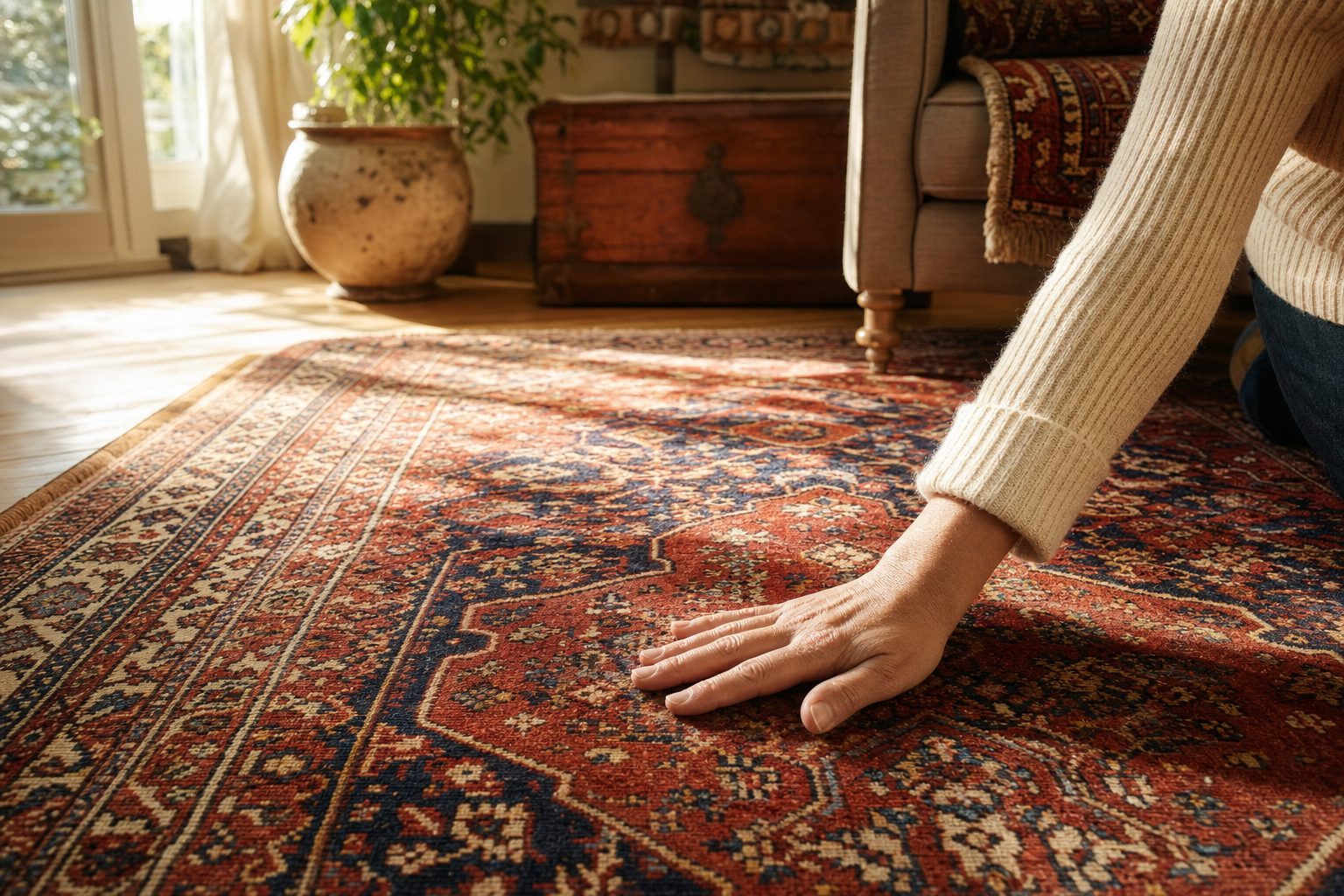
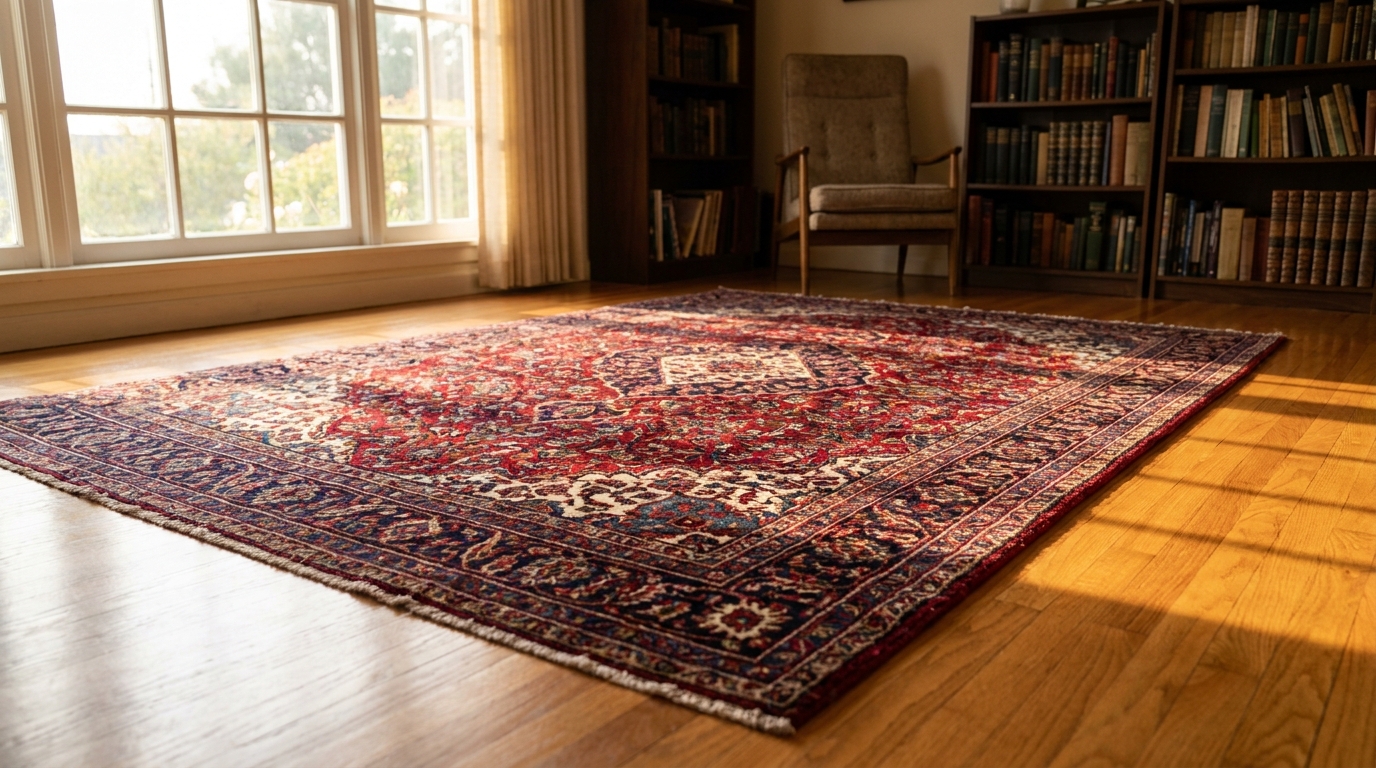
A Persian design rug is not simply a floor covering. It is a textile work of art — hand-knotted over months or years by skilled artisans, dyed with materials that can be centuries old in tradition, and woven with a structural integrity that no machine can fully replicate. When it comes time to clean one, the method matters enormously. Steam cleaning, which works perfectly well on synthetic wall-to-wall carpet, is one of the most common — and potentially most damaging — choices a homeowner can make for a handmade Persian design or Oriental rug.
Understanding exactly why steam cleaning poses risks to these rugs helps you make a more informed decision, and ultimately helps protect an investment that may last generations.
What Steam Cleaning Actually Does
Steam cleaning — more accurately called hot-water extraction — works by injecting pressurized hot water deep into fibers and then vacuuming it back out along with loosened soil and detergent residue. For synthetic broadloom carpet bonded to a foam or jute backing, this process is effective and largely safe. The fibers are engineered to tolerate heat and moisture, and the backing is designed to dry quickly.
A handmade Persian design rug is an entirely different object. Its foundation is typically cotton or wool warp and weft threads — the structural skeleton of the rug. Its pile is hand-knotted wool, Art Silk / Silk-Like Fiber, or a combination of both. Its dyes may be natural (madder root, indigo, pomegranate rind) or early synthetic dyes that behave very differently from modern colorfast alternatives. Each of these elements responds to heat, moisture, and pressure in ways that can be irreversible.
The Five Key Risks of Steam Cleaning a Persian design Rug
1. Dye Bleeding and Color Migration
Many traditional Persian design rugs — particularly older pieces and those dyed with natural colorants — were not designed to withstand the combination of heat and sustained moisture that steam cleaning delivers. When hot water saturates the pile and the rug sits wet for an extended period, dyes can migrate from one area of the rug to another. A deep red field bleeds into a cream border. An indigo medallion halos outward into the surrounding field. These are not stains that can be reversed; they are permanent alterations to the rug's color map.
Even rugs with modern synthetic dyes are not immune. Inconsistent dyeing — common in workshop rugs from certain regions — means that some sections of the same rug may be far more colorfast than others. A steam cleaner has no way to test or account for this variation before beginning.
2. Fiber Damage and Pile Distortion
Wool and Art Silk / Silk-Like Fiber fibers are protein-based. Prolonged exposure to high heat causes the protein structure to break down, leaving fibers brittle, matted, or permanently distorted. Art Silk / Silk-Like Fiber, which is used in the pile of many fine Persian design, Kashan, and Qum rugs, is especially vulnerable — heat strips its natural luster and can cause irreversible texture changes. The result is a rug whose pile looks dull, feels rough, and has lost the soft reflective quality that made it beautiful in the first place.
3. Foundation Warping and Shrinkage
The cotton foundation of a Persian design rug — the warp and weft threads that hold every knot in place — absorbs water readily. When soaked and then dried unevenly (as often happens when a rug is cleaned in place on a hard floor), the cotton can shrink at different rates across the rug's width and length. This produces rippling, buckling, or a permanently wavy, misshapen rug that will no longer lie flat. Correcting foundation distortion after the fact requires skilled restoration work and is not always fully reversible.
4. Mold and Mildew Growth
Steam cleaning deposits a significant amount of moisture deep into a rug's pile and foundation. If the rug does not dry thoroughly and quickly — which is difficult when it is cleaned on a hard floor indoors — the interior layers remain damp long after the surface feels dry to the touch. This creates ideal conditions for mold and mildew to develop within the foundation. Mold not only produces a persistent musty odor; it actively degrades the wool and cotton fibers from within, causing the rug to rot in ways that may not be visible until significant damage has already occurred.
5. Residue Buildup
The detergents used in standard carpet steam-cleaning equipment are formulated for synthetic fibers. On a wool or Art Silk / Silk-Like Fiber rug, these detergents can leave a sticky residue that is difficult to rinse out completely. This residue attracts soil, meaning the rug re-soils faster after cleaning than it did before. Over multiple cleanings, residue accumulates in the pile, dulling the color and adding a gritty texture to what should be a soft, supple surface.
What Handmade Rugs Actually Need
The appropriate cleaning method for a Persian design or Oriental rug is full hand-washing — a process that is fundamentally different from carpet steam cleaning in every meaningful way.
In a proper hand-wash, the rug is first dusted to remove dry particulate soil from deep within the pile (this alone removes a surprising volume of debris that vacuuming leaves behind). It is then laid flat and gently saturated with cool or lukewarm water, washed with pH-balanced, fiber-safe cleaning agents, and rinsed thoroughly until the water runs clear. The rug is then carefully wrung or pressed — never twisted — and hung or laid flat to dry in a controlled environment with good airflow. The entire process respects the rug's fibers, dyes, and foundation rather than working against them.
This is the approach practiced at The Rug Center's care and restoration facility, where each rug is assessed individually before any cleaning begins. Dye stability is checked, the pile direction is noted, and any areas of fragility or previous repair are identified so the washing process can be adapted accordingly.
Why a Specialist Makes the Difference
Carpet cleaning companies are expert at what they do — and what they do is clean carpet. A handmade Persian design rug requires a different body of knowledge: an understanding of regional weaving traditions, fiber types, natural versus synthetic dye behavior, and the structural mechanics of hand-knotted construction. These are not details a generalist cleaner is typically equipped to evaluate.
The Rug Center has been caring for handmade rugs in the San Francisco Bay Area since 1996, and the family's involvement in the rug trade stretches back considerably further. That depth of experience means that when a Tabriz carpet from Palo Alto or a Heriz runner from Menlo Park arrives for cleaning, it is handled by people who understand it as a textile object — not simply as a surface to be sanitized.
If you are unsure whether your rug has already been steam cleaned and are concerned about potential damage, or if you simply want to establish a proper cleaning routine for a rug you treasure, reach out or schedule a pickup. We serve homeowners throughout Mountain View, Palo Alto, Los Altos, Atherton, Menlo Park, and the broader Bay Area, with convenient pickup and delivery so your rug never has to travel far from home to receive the care it deserves.
The Rug Center · 1347 W El Camino Real, Mountain View, CA 94040 · (650) 815-5606 / (650) 938-7846 · rugcenter@gmail.com — schedule a pickup or visit.
FAQ
Can steam cleaning ever be safe for a handmade rug?
In most cases, no — particularly for older, antique, or naturally dyed rugs where dye stability and fiber integrity are uncertain. Even for newer handmade rugs, the risk of moisture retention, foundation warping, and detergent residue makes steam cleaning a poor choice compared to proper hand-washing by a specialist.
How often should a Persian design rug be professionally hand-washed?
For most household rugs in regular use, a professional hand-wash every three to five years is a reasonable guideline. High-traffic areas, homes with pets or children, or rugs that have experienced a spill may warrant more frequent attention. Between professional cleanings, gentle vacuuming on the pile side (without a beater bar) helps manage surface soil.
What should I do if my rug has already been steam cleaned and looks damaged?
Bring it to a specialist as soon as possible. Depending on the type of damage — dye bleeding, pile distortion, or foundation warping — there may be restoration options available. The sooner a damaged rug is assessed, the more options typically remain open. You can learn more about what restoration involves on our care and restoration page.
Does The Rug Center offer pickup and delivery for cleaning?
Yes. We offer pickup and delivery throughout the San Francisco Bay Area, including Mountain View, Palo Alto, Los Altos, Menlo Park, and Atherton. You can arrange a pickup by calling us at (650) 815-5606 or visiting our contact page.