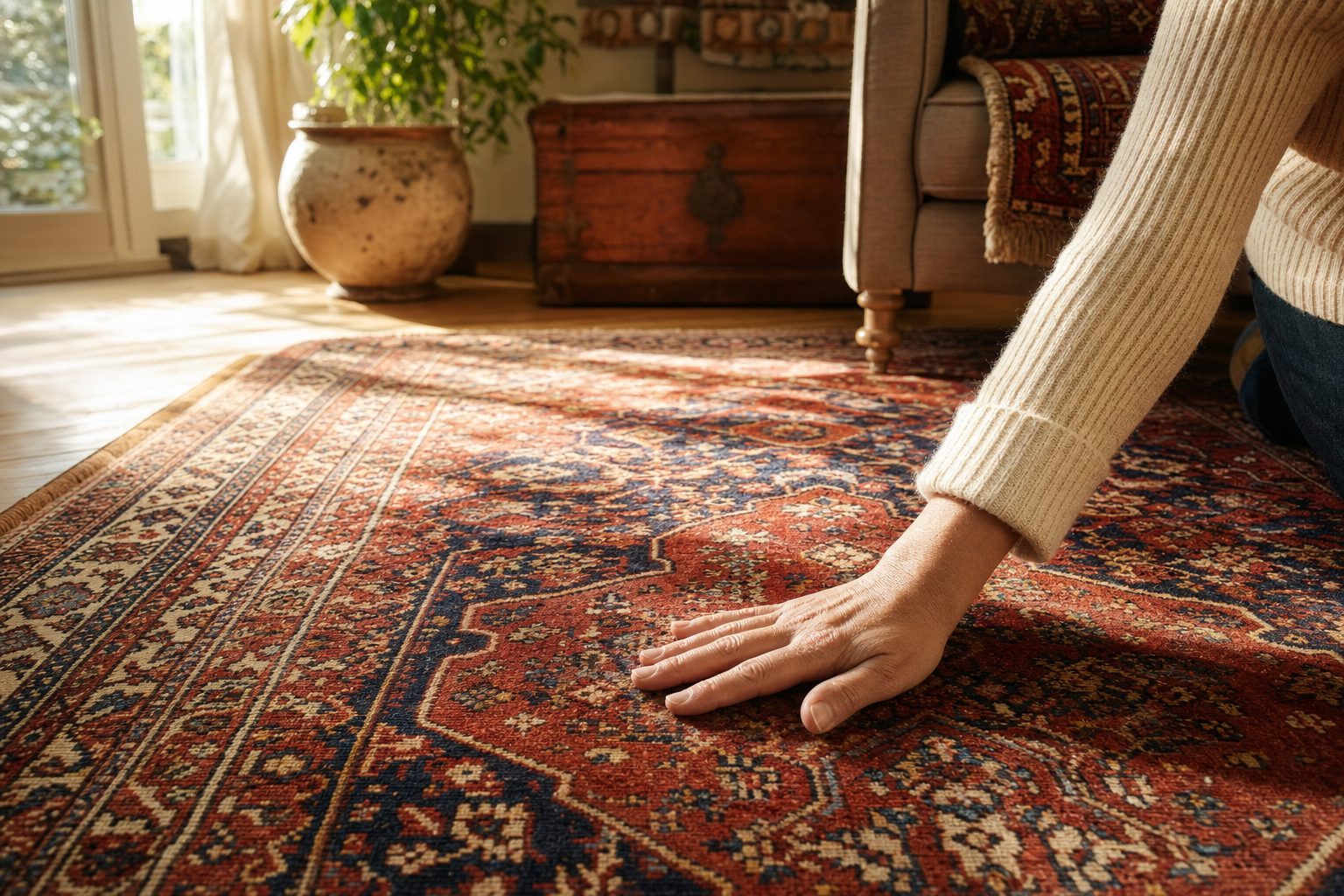
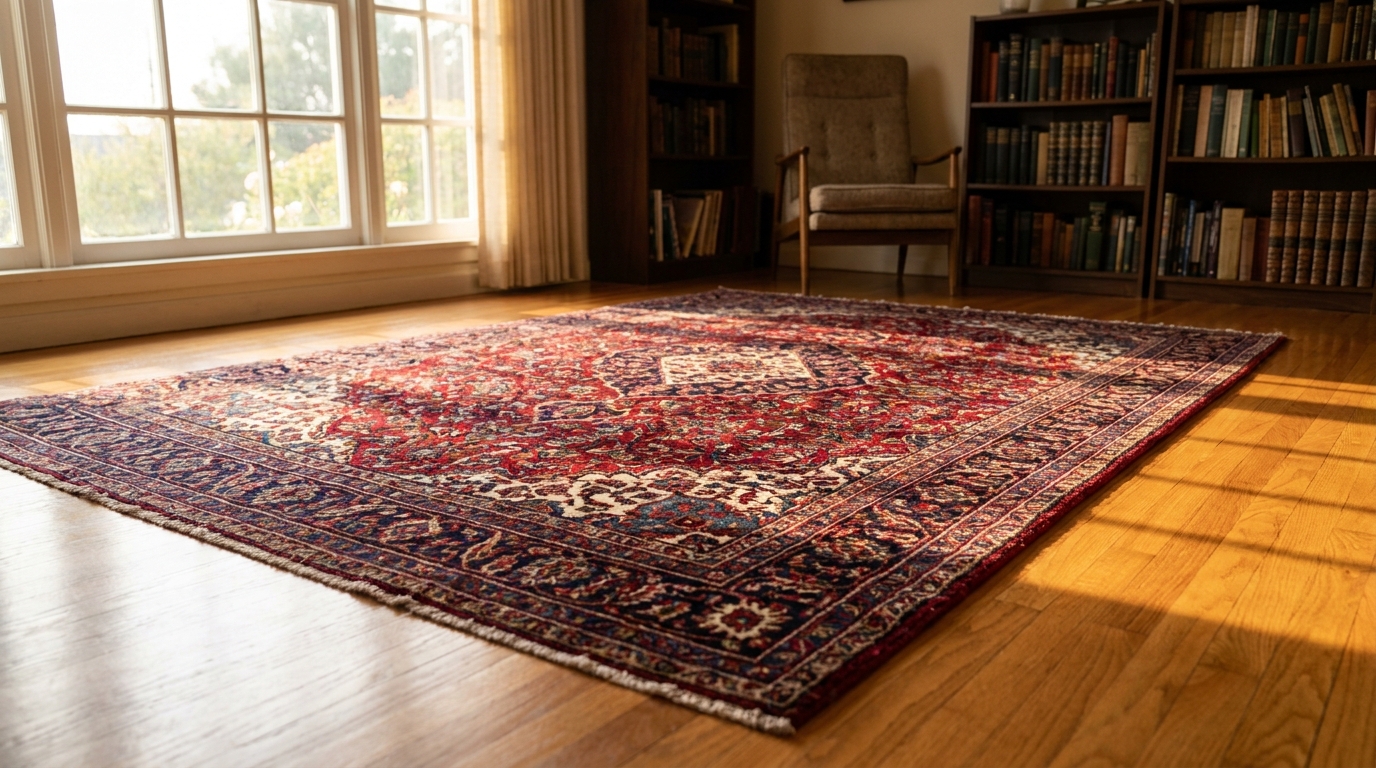
Wool Rug Care in Bay Area Fog and Humidity
There is a particular kind of morning in the Bay Area — fog rolling in off the Pacific, the air cool and damp against the windows, the neighborhood quiet under a grey-white sky. For residents of Mountain View, Menlo Park, Palo Alto, and the coastal communities of the Peninsula, this marine layer is simply part of life. It softens the light, keeps summers mild, and makes the region one of the most livable places in the country.
But for the handmade wool rugs in your home, that same humidity deserves careful attention.
Wool is a natural fiber with remarkable properties — it regulates temperature, resists soil, and can last generations when properly maintained. Yet those same organic qualities that make wool so desirable also make it responsive to its environment. Moisture, if left unmanaged, can quietly compromise a rug's structure, color, and longevity. Understanding how the Bay Area's unique climate interacts with wool is the first step toward protecting a rug that may represent both a financial and emotional investment.
How Humidity Affects Wool Rugs
Wool fibers are hygroscopic, meaning they naturally absorb and release moisture from the surrounding air. In moderate amounts, this is actually a strength — wool can absorb up to 30% of its own weight in moisture without feeling wet, and it releases that moisture gradually. In a dry climate, this is largely a non-issue.
In the Bay Area, however, relative humidity frequently climbs — especially in communities closer to the coast, such as Half Moon Bay, Pacifica, or the western neighborhoods of San Francisco. Even inland areas like Mountain View and Los Altos experience significant moisture variation between foggy mornings and warmer afternoons. This repeated cycle of absorption and release can, over time, cause problems:
- Mold and mildew growth — particularly on the rug's foundation and backing, where moisture can become trapped against a floor
- Fiber distortion — wool pile may become wavy, rippled, or misshapen as fibers swell and contract
- Color migration — in hand-knotted rugs with natural or vegetable dyes, sustained dampness can encourage dye bleeding between colors
- Odor development — a musty smell is often the first sign that moisture has been sitting in a rug longer than it should
- Dry rot — in severe or prolonged cases, the cotton or wool foundation of a rug can weaken structurally, a condition that is difficult and costly to reverse
None of these outcomes are inevitable. But they are more likely in a climate like ours than in drier regions, and they underscore why wool rug care in the Bay Area calls for a degree of local awareness.
Practical Steps for Bay Area Rug Owners
Ensure Adequate Air Circulation
One of the simplest and most effective measures is ensuring air can circulate beneath and around your rug. Rugs laid directly on concrete subfloors — common in older Bay Area homes and converted spaces — are particularly vulnerable to moisture wicking upward. A quality rug pad creates a barrier and allows air movement. Look for pads made from natural felt or a felt-and-rubber combination rather than solid rubber, which can trap moisture.
Rotate Your Rugs Seasonally
Bay Area seasons are subtle but real. The heaviest fog typically arrives in June and July — the famous "June Gloom" — and the wettest months run from November through March. Rotating your rugs every six to twelve months serves two purposes: it distributes foot traffic wear evenly, and it prevents any one section of the rug from sitting in a consistently damp zone near a sliding door, bay window, or exterior wall.
Address Spills Immediately and Correctly
Wool's natural lanolin coating offers some initial resistance to liquid spills, but that protection is not indefinite. When a spill occurs, blot — never rub — with a clean, dry cloth, working from the outer edge inward to prevent spreading. Avoid saturating the area with water or applying household carpet-cleaning sprays, which are formulated for synthetic wall-to-wall carpet and can strip lanolin, alter pH balance, or cause dye bleeding in handmade rugs.
If a spill is significant or you are uncertain about the dye stability of your rug, it is always safer to consult a specialist. You can learn more about professional stain treatment and what it involves on our care and restoration page.
Monitor Rooms with Poor Ventilation
Bathrooms, laundry rooms, and enclosed sunrooms are common places where homeowners display smaller decorative rugs — and they are also the rooms most prone to humidity spikes. If you have a wool rug in one of these spaces, consider a small dehumidifier during the wettest months, or relocate the rug if condensation is a recurring issue.
Professional Cleaning on a Sensible Schedule
Handmade wool rugs benefit from professional hand-washing — not steam cleaning, and not the same process used for wall-to-wall carpet. Steam cleaning applies high heat and significant moisture, and the extraction process is not designed for the delicate dye structures and hand-knotted foundations of fine rugs. In a humid climate, incomplete drying after any cleaning method can be more damaging than the soil itself.
For most Bay Area households, a professional hand-wash every one to three years is a reasonable interval, adjusted for foot traffic, pets, and any incident cleaning needs. A specialist will also inspect the rug's foundation, fringe, and backing during the process — catching early signs of moth activity, wear, or moisture damage before they escalate.
What to Look for in a Rug Care Specialist
Not all cleaning services are equally equipped to handle handmade wool rugs. When evaluating a provider, consider:
- Hand-washing capability — the rug should be washed flat, rinsed thoroughly, and dried in a controlled environment
- Drying infrastructure — in a humid climate, proper drying is arguably the most critical step; ask how and where rugs are dried
- Knowledge of dye types — vegetable-dyed, chrome-dyed, and synthetic-dyed rugs each respond differently to water and cleaning agents
- Repair and restoration experience — a shop that also handles repairs can assess structural integrity during cleaning
- Pickup and delivery — transporting a large, wet, or fragile rug safely is not trivial; a service that handles logistics removes significant risk
These are not abstract criteria. They reflect the real differences between a generalist cleaning service and a specialist who works with handmade rugs daily.
Storing Wool Rugs Through Bay Area Winters
If you are rotating a rug into storage for the season, preparation matters. Clean the rug professionally before storing — soil and organic residue attract moths, which are an active concern in the Bay Area. Roll the rug (do not fold it) around an acid-free tube if possible, wrap it in breathable cotton muslin or a similar fabric, and store it in a dry, climate-controlled space. Avoid plastic sheeting, which traps moisture and creates exactly the environment you are trying to prevent.
Check stored rugs every few months for any sign of moth activity — small larvae, webbing, or irregular bare patches in the pile — and air them out if the storage area has felt damp.
The Value of Local Expertise
There is a meaningful difference between generic rug care advice and guidance calibrated to where you actually live. The Bay Area's fog, its coastal humidity, its older housing stock with variable ventilation — these are the real conditions your rugs contend with. A specialist who understands this environment, and who has worked with the full range of handmade rugs that Bay Area collectors tend to own — Persian design, Turkish, Afghan, Tibetan, Moroccan — brings a level of contextual knowledge that general cleaning services simply do not offer.
For Bay Area homeowners who want to explore what professional care looks like in practice, or who are considering adding a handmade rug to their home, browsing our rug collections or reading more in our journal is a good place to start.
If your wool rug has been exposed to prolonged dampness, has developed an odor, or is simply due for its periodic professional cleaning, The Rug Center is ready to help. Call The Rug Center at (650) 815-5606, or visit us at 1347 W El Camino Real, Mountain View, CA 94040. We offer pickup and delivery throughout the Bay Area, and every rug we care for is hand-washed and dried with the attention it deserves. You can also learn more about our full range of services or arrange a pickup at our visit page.
FAQ
Can Bay Area humidity alone damage a wool rug, even without a spill?
Yes, over time it can. Persistent ambient humidity — particularly in poorly ventilated rooms or on concrete subfloors — can encourage mold, mildew, and fiber distortion in wool rugs without any single spill event. Good air circulation, appropriate rug pads, and periodic professional cleaning are the most effective preventive measures.
How often should I have my wool rug professionally cleaned in the Bay Area?
For most households, every one to three years is a reasonable interval. Rugs in high-traffic areas, homes with pets, or rooms prone to humidity may benefit from more frequent attention. A specialist can assess your rug's condition and recommend a schedule suited to your specific situation.
Why can't I just use a carpet cleaning or steam-cleaning service for my wool rug?
Carpet and steam-cleaning services are designed for synthetic wall-to-wall carpet, which has very different construction and dye characteristics than handmade wool rugs. High heat, strong detergents, and incomplete drying — risks associated with these methods — can cause dye bleeding, fiber damage, and moisture retention in handmade rugs. Hand-washing in a controlled environment is the appropriate method.
What are the early signs that my wool rug has a moisture problem?
The most common early signs are a musty or earthy odor, slight waviness or rippling in the pile, and — in more advanced cases — visible discoloration or dark patches on the backing. If you notice any of these, it is worth having the rug inspected by a specialist promptly, as moisture damage tends to worsen the longer it goes unaddressed.